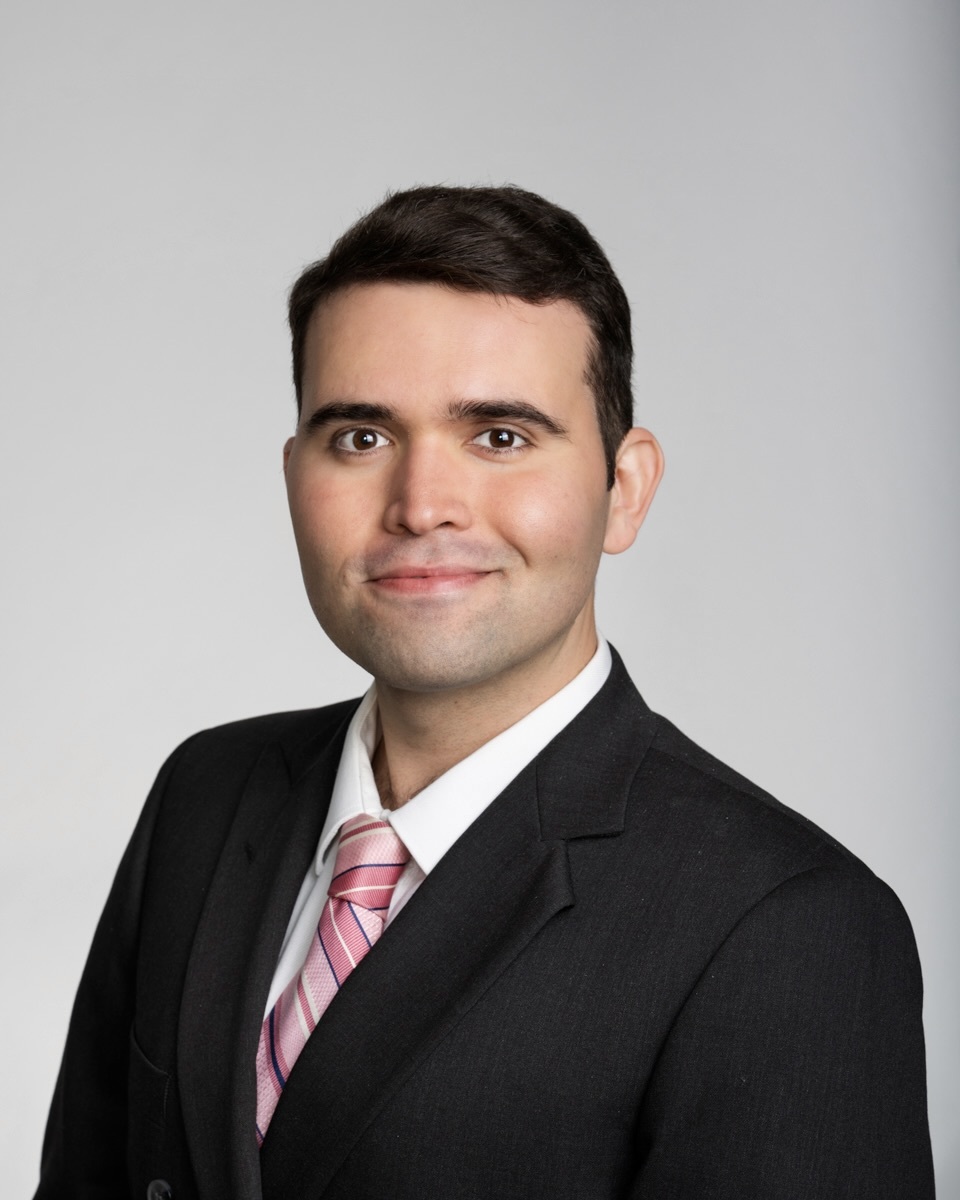
The doctoral dissertation in the field of Law of the Sea will be examined at the Faculty of Social Sciences and Business Studies at Joensuu Campus and online.


What is the topic of your doctoral research? Why is it important to study the topic?
My doctoral research examines the extent to which the United Nations Convention on the Law of the Sea (UNCLOS) sustains and legitimises harmful practices of ocean use and governance, and whether we should aim to reimagine other ways to govern the oceans. This matters because, despite its perceived contributions to the oceans’ protection, it is painfully self-evident that the years since UNCLOS adoption have also been marked by the steady ecological decline of marine environments worldwide. This, in turn, suggests that the very framework meant to safeguard the oceans may have, in some measure, contributed to their deterioration. As such, my research demystifies the notion that UNCLOS is inherently good, sufficient, or even desirable for confronting this crisis. On the contrary, I take the provocative stance of arguing that UNCLOS may itself constitute one of the greatest obstacles to transformative change in ocean governance, precisely at a time when such change is most urgently needed.
What are the key findings or observations of your doctoral research?
My research finds that UNCLOS legitimises ocean harm in at least three ways. First, through a bordering logic that both enables and constrains responses to ecological degradation. Second, by severing the legal and ecological continuum between marine and freshwater systems. And third, through the privileging of short-term regulatory horizons. Reflecting on these harms, I concluded that reimagining the law of the sea requires treating time as a legal dimension, alongside UNCLOS' zonal and functional approaches. It also requires confronting what I call the 'living treaty syndrome,' which represents a misplaced scholarly expectation that the living treaty approach can, given enough time, resolve all UNCLOS' shortcomings without the need for transformative change.
Treaties like UNCLOS are often called "living treaties," a metaphor conveying that, like a tree, they grow with the times. This approach, I argue, is precisely what stands in the way of the transformative change ocean governance desperately needs. In presenting my case, I created a timeline spanning from the second century to the BBNJ Agreement's entry into force in 2026, which I believe is the most comprehensive visual depiction of the law of the sea's history to date. The timeline creates space for reflection in acknowledging that no treaty is permanent, and it is only a matter of time before the law of the sea evolves into a framework that might be unrecognisable from today’s perspective.
How can the results of your doctoral research be utilised in practice?
I divide the practical implications of my research into short- and long-term implications. Starting with the latter, my research contributes to the development of the 'Good Ancestor Policy,' articulated in the 2023 UN System Common Principles on Future Generations, by arguing that UNCLOS must become a 'good ancestor.' Like many treaties, UNCLOS inherits provisions from earlier treaties and customs, and this inheritance will likely persist in the future. As such, my research develops a practical agenda on how UNCLOS can become a ‘good ancestor’ and what its role is in securing a long-term future for humanity and the marine environment, potentially hundreds, if not thousands, of years ahead. To achieve this, in the short-term, I propose that decisions affecting the marine environment must require intergenerational impact assessments alongside existing environmental impact assessments; or, at a minimum, by building long-term and cumulative effects into existing assessment procedures.
What are the key research methods and materials used in your doctoral research?
My thesis consists of five original research articles written from 2021 to 2026, and a synthesis that consolidates the findings from the individual articles. Two articles are single-authored, and the rest are co-authored. In all three co-authored articles, I served as the corresponding first author and led the research, writing, and publishing process. My synthesis is interdisciplinary and draws on a multimethod approach. It further draws on one theoretical and two conceptual frameworks that bring together insights from disciplines such as legal geography, legal infrastructural studies, border studies, philosophy, law, and history. The research articles draw on a range of legal research strategies and conceptual foundations, spanning fields such as law, legal geography, ecology, and futures studies. An attentive reader will also notice the influence of critical legal scholarship within my research, specifically the methodological perspectives from critical environmental law.
The doctoral dissertation of César Soares de Oliveira, MICL, entitled UNCLOS as an Infrastructure of Ocean Harm: Critical Reflections on the Long-Term Future of the Law of the Sea, will be examined at the Faculty of Social Sciences and Business Studies. The opponent will be Professor Vito de Lucia, The Arctic University of Norway, and the custos will be Professor Niko Soininen, University of Eastern Finland. The language of the public defence is English.
For further information, please contact:
César Soares de Oliveira, cesar.soares.de.oliveira(at)uef.fi