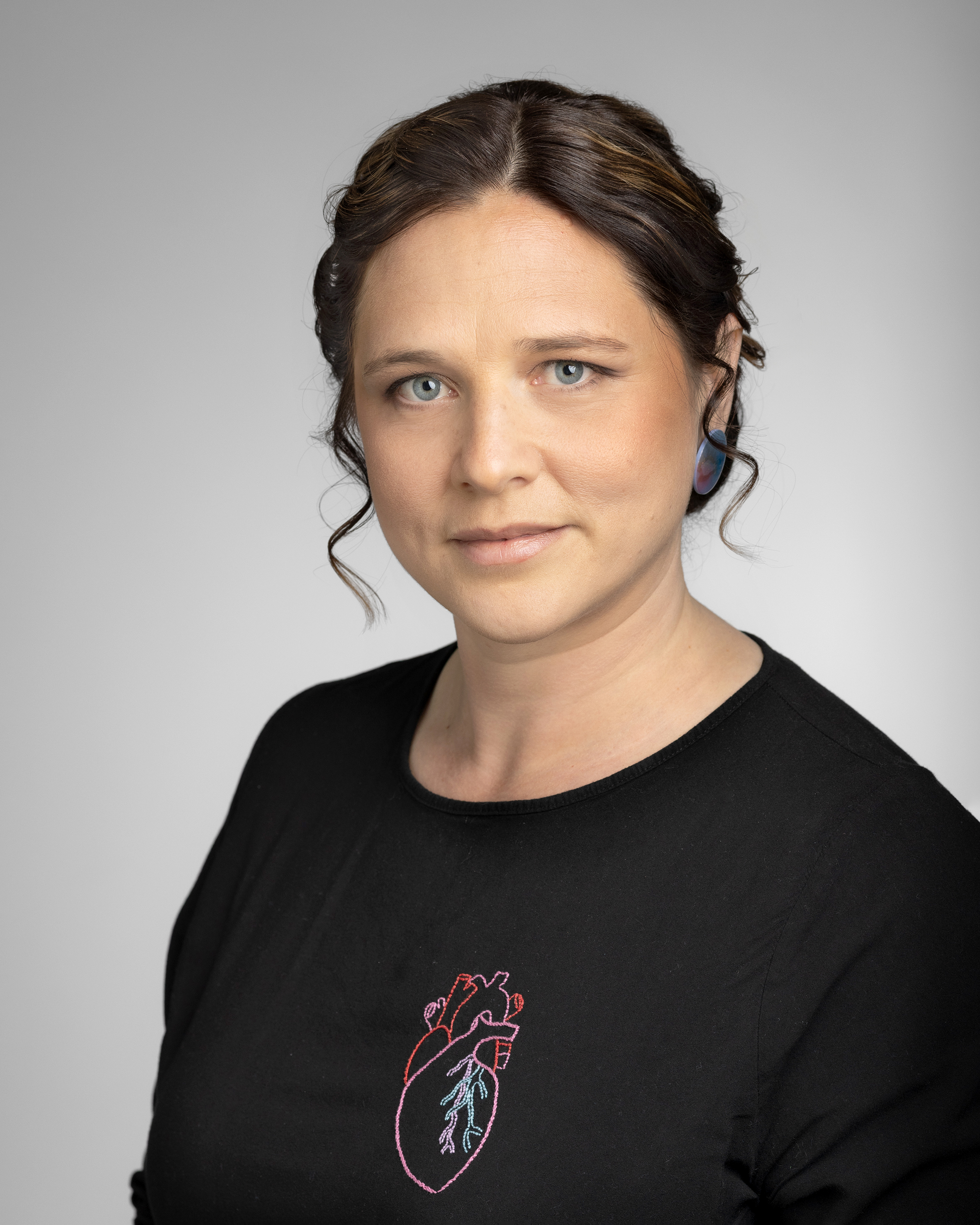
The doctoral dissertation in the field of Molecular Medicine will be examined at the Faculty of Health Sciences at Kuopio Campus. The public examination will be streamed online.
What is the topic of your doctoral research? Why is it important to study the topic?
Preclinical functional magnetic resonance imaging (fMRI) is a valuable tool for investigating whole-brain function in animal models. These models make it possible to study neurological and neuropathological mechanisms under controlled experimental conditions, providing insights that are difficult to obtain in clinical studies, where patient backgrounds, disease onset, and disease progression are often highly variable. However, preclinical fMRI is commonly performed under anesthesia to reduce animal movement and stress during imaging. Because anesthesia can alter brain function, it may influence the interpretation of imaging results. Therefore, it is important to develop imaging approaches that minimize the use of anesthesia while still reducing motion artifacts and preserving high-quality fMRI data.
What are the key findings or observations of your doctoral research?
This thesis explores two approaches for reducing anesthesia while minimizing motion during animal fMRI measurements: sub-anesthetized imaging in rats and awake imaging in mice. Both protocols provided more physiologically relevant measures of brain function than conventional anesthetized imaging, while also offering distinct practical advantages. The sub-anesthetized protocol enabled high-quality data acquisition after only a short habituation period, making it particularly suitable for longitudinal studies. This was demonstrated in a traumatic brain injury model, where early disruptions and partial recovery of corticothalamic connectivity were observed. The study also identified secondary thalamic neuroinflammation and showed its association with long-term alterations in corticothalamic connectivity.
The awake imaging protocol in mice was combined with a silent zero echo time-type fMRI sequence, enabling the measurement of auditory and visual sensory responses. In addition, ketamine-xylazine anesthesia, which is commonly used in auditory research, markedly attenuated responses to auditory stimulation. This finding emphasizes the confounding and potentially unpredictable effects of anesthesia on fMRI results and demonstrates the value of reduced-anesthesia imaging protocols. Overall, this work supports the broader use of these methods in preclinical neuroscience to improve the translational relevance of animal fMRI studies.
What are the key research methods and materials used in your doctoral research?
This thesis consisted of two experimental parts. The first part focused on rat fMRI under light isoflurane sedation using a 7 T scanner, which was compared with awake rat fMRI datasets acquired on-site and from an open database. The same approach was then applied in a longitudinal rat model of traumatic brain injury induced by lateral fluid percussion injury. Animals were followed with multimodal imaging: resting-state fMRI to assess corticothalamic functional connectivity, diffusion tensor imaging to evaluate structural and microstructural changes, and positron emission tomography with histology to assess thalamic neuroinflammation and tissue alterations.
The second part focused on awake mouse sensory fMRI using a quiet zero echo time sequence, multi-band sweep imaging with Fourier transformation (MB-SWIFT), during visual and auditory stimulation at 9.4 T scanner. Responses in awake mice were compared with those measured under ketamine-xylazine anesthesia.
All imaging was done at the Kuopio Biomedical Imaging Unit. The computation was performed on servers provided by the UEF Bioinformatics Center.
The doctoral dissertation of Ing. Lenka Dvořáková, entitled Minimizing the effect of anesthesia in preclinical fMRI: Application to traumatic brain injury, will be examined at the Faculty of Health Sciences. The Opponent in the public examination will be Professor Shella Keilholz of Emory University and Georgia Tech, US, and the Custos will be Professor Olli Gröhn of the University of Eastern Finland. The public examination will be held in English.
Doctoral dissertation
For further information, please contact:
Ing. Lenka Dvořáková, [email protected], https://uefconnect.uef.fi/lenka.dvorakova/