The doctoral dissertation in the field of Computer Science will be examined at the Faculty of Science, Forestry and Technology, Kuopio campus and online.


What is the topic of your doctoral research? Why is it important to study the topic?
This research develops deep learning methods for automatic pathology detection in Wireless Capsule Endoscopy (WCE) imaging. WCE is a non-invasive diagnostic tool that generates massive image data, making manual review slow and error-prone. The study introduces transformer-based real-time detection models to improve accuracy, speed, and interpretability. By enhancing early and reliable detection of gastrointestinal diseases, it reduces clinicians’ workload and strengthens the clinical integration of artificial intelligence in medical imaging.
What are the key findings or observations of your doctoral research?
The research found that the proposed transformer-based RT-DETR model significantly improves the precision and speed of pathology detection in Wireless Capsule Endoscopy videos. It achieved real-time performance (up to 270 FPS) and higher accuracy than existing models such as YOLOv3 and Faster R-CNN. These results demonstrate that deep learning can enable fast, reliable, and clinically practical detection of gastrointestinal diseases from capsule video data.
How can the results of your doctoral research be utilised in practice?
The results of this research can be directly applied in developing intelligent diagnostic tools for gastrointestinal disease detection. The proposed real-time transformer-based model (RT-DETR) can be integrated into Wireless Capsule Endoscopy (WCE) systems to automatically identify abnormalities during video analysis, reducing physicians’ review time and diagnostic errors. Hospitals and medical imaging centers can utilize the framework to enhance clinical workflows, while researchers can extend it for other endoscopic and biomedical imaging tasks. Furthermore, the methodology supports deployment on edge and cloud platforms, enabling scalable, real-time medical AI applications that strengthen early diagnosis and improve patient outcomes.
What are the key research methods and materials used in your doctoral research?
The research combined systematic review, benchmarking, and model development. It first analysed existing deep learning methods for Wireless Capsule Endoscopy (WCE). Then, leading object detection models like YOLOv3, SSD, RetinaNet, and Faster R-CNN were compared using the Kvasir-Capsule dataset in COCO format. Finally, a real-time transformer-based model (RT-DETR) was developed and tested for accuracy, speed, and clinical relevance. The study used transfer learning, semi-supervised learning, and data augmentation, with evaluation based on precision, recall, F1-score, and mAP.
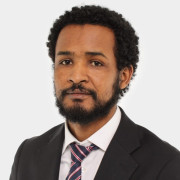
The doctoral dissertation of Tsedeke Habe, MSc, entitled Towards Real-Time Pathology Detection in Wireless Capsulendoscopy Imaging Based on Deep Learning will be examined at the Faculty of Science, Forestry and Technology, Kuopio campus on 7th November 2025, Ca102, Canthia. The opponent will be Professor Robin Strand, Uppsala University, Sweden, and the custos will be Professor Pekka Toivanen, University of Eastern Finland. Language of the public defence is English.
For more information, please contact:
Tsedeke Habe, [email protected], tel. +358 45 850 7775
- Public examination
- Dissertation (PDF)
- Photo (coming)