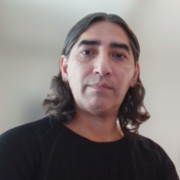
Professor Ariel Abeldaño Zuñiga wants to expand the traditional boundaries of nursing science towards a more global and planetary approach.


In his research, Abeldaño Zuñiga examines the effects of climate change on human health from various perspectives with a network of international partners. “My early focus was on the impact of environmental disasters on public health, but over the years I have focused more and more on what happens before disasters.”
In an ongoing project, he has studied the health implications of wood and charcoal use for cooking in rural Latin American communities. “We have found some interesting associations with depressive symptoms and cognitive impairment. Those who are the most affected are women of older age.”
“Thus, our research is not just about health, but also about environmental justice, gender justice and ageing justice, in the sense that not everyone ages in the same way, because some are in a more vulnerable position than others.”
Another line of research is the impact of climate change on communicable diseases. “For example, we are trying to model future outbreaks of Ebola in Sub-Saharan Africa. Bats are a natural reservoir of Ebola and may be responsible for its transmission. Climate change reduces the availability of their natural food sources, such as figs, and as a result, they spread to wider areas and look for food in human communities, resulting in more contacts with people.”
Strong expertise reinforced
Abeldaño Zuñiga hopes his research will increase understanding of how to be better prepared for disasters. “Sadly, however, governments and politicians do not seem very keen to be better prepared, since they often overlook research and evidence-based recommendations.”
On the other hand, his expertise has been welcomed by international organisations, such as the World Bank, the International Organization for Migration and the United Nations Development Programme, which have consulted him on various projects.
Among his meaningful achievements, Abeldaño Zuñiga mentions articles published as part of the Global Burden of Diseases study, which is one of the largest scientific collaborations in the world, as well as research with Dr Gustavo Nagy from the Nobel Peace Prize-winning Intergovernmental Panel on Climate Change (IPCC).
Abeldaño Zuñiga’s research reflects his multidisciplinary background in nursing science, public health and environmental demography. He has previously held academic positions in his native Argentina, as well as in Bolivia and Mexico. His first experience of Finland was as a lecturer at the University of Helsinki, after which he seized the opportunity to apply for his current post.
“My proposal was to expand the traditional boundaries of nursing science, and my environmental health focus was seen to complement the existing expertise at the University of Eastern Finland’s Department of Nursing Science. We are also starting to introduce more global and planetary health related topics in our master’s programmes.”
“The university itself is very prestigious especially when it comes to health sciences and nursing science, which consistently performs well in international rankings. In addition, this is a work community where people are really nice, and Kuopio is a welcoming city.”
Ariel Abeldaño Zuñiga
Professor of Nursing Science, University of Eastern Finland, 1.5.2026–
- Registered nurse, National University of Salta, Argentina, 2001
- BSc (Nursing), National University of Salta, 2009
- MSc (Public Health), National University of Cordoba, Argentina, 2014
- PhD (Demography), National University of Cordoba, 2014
- MSc (Pedagogy), National University of Cordoba, 2023
Key roles:
- Professor, University of Sierra Sur, Mexico, 2016–2026
- University Lecturer, University of Helsinki, 2023–2024
- Individual consultant, The World Bank, 2020–2021, 2023–2024
- Individual contractor, UN International Organization for Migration, 2021–2022
- Lecturer, University of the Valley of Mexico, 2018–2023
- National Researcher, Level 2, National Research Council (CONACYT), Mexico, 2018–
- National Researcher (Honorary position), National Research Council (CONICET), Argentina, 2017–
- Associate researcher (Honorary position), Catholic University of La Paz, Bolivia, 2017–
- Adjunct Professor, University of Villa Maria, Argentina, 2015–2016