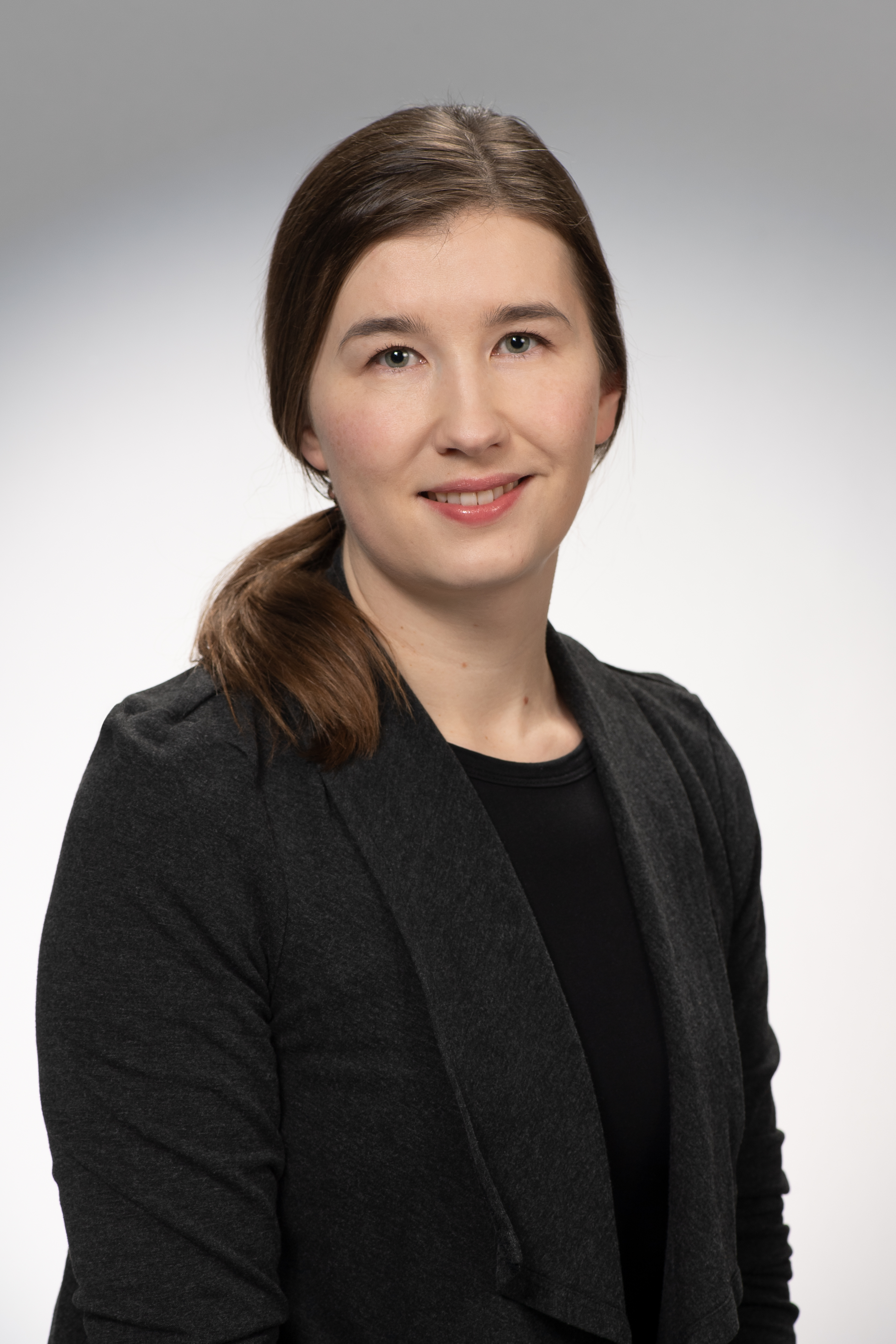
The doctoral dissertation in the field of Health and Social Management will be examined at the Faculty of Social Sciences and Business Studies at Kuopio Campus. The public examination will be streamed online.


What is your doctoral research about? Why is it important to study this topic?
My doctoral research examines subjective well-being among middle-aged and older Europeans – that is, how people themselves evaluate and experience their lives – and the resources associated with it. I examine how age is associated with subjective well-being; how health, financial resources and social relationships are associated with subjective well-being at different stages of later life; how individuals’ resources change as they age and in relation to one another; and whether partners’ life satisfaction is interdependent.
The topic is important because Europe’s population is ageing and increasing numbers of people reach very old age. At the same time, life circumstances, resources and support needs vary considerably across the ageing population. Examining subjective well-being helps us understand which factors support living well from midlife into very old age and how ageing policy and health and social services can respond to different support needs.
What are the key findings or observations of your doctoral research?
The findings show that the association between age and subjective well-being differed depending on the measure used. Life satisfaction increased after age 50 until around age 70 and then remained relatively high, whereas needs-related quality of life began to decline from around age 70 onward. Good health, sufficient financial resources and social relationships were associated with higher subjective well-being from midlife into very old age, and none of these resources became irrelevant with advancing age.
Health was the resource most consistently associated with subjective well-being, whereas the negative associations of financial difficulties and widowhood with life satisfaction weakened somewhat with age. Positive and negative changes in resources were also interconnected. For example, health deterioration, entering financial hardship and spousal loss were linked across domains, suggesting that disadvantage may accumulate. Partners’ life satisfaction was also clearly interdependent: partners were often happy or unhappy together, although the strength of the association varied, for example, between countries.
What is novel and interesting about the research is that ageing and subjective well-being are examined through complementary resource theories, bringing together age-stage differences, interconnected changes in resources and couple-level interdependence in well-being within a single framework.
How can the results of your doctoral research be applied in practice?
The findings can be applied in ageing policy and in the planning and delivery of health and social services. They highlight that support needs related to health, financial circumstances and social relationships should not be considered in isolation, as difficulties in one area of life may be linked to difficulties in others. Health deterioration, financial hardship or spousal loss, for example, may provide important points for assessing support and service needs more broadly and offering timely, cross-sectoral support. In service provision and evaluation, it is also important to consider partners and other close relationships alongside the individual, because changes in one person’s well-being or support needs may have implications for those close to them. Measuring subjective well-being can complement indicators of health and functioning and help assess service needs and effects.
What are the key research methods and data used in your doctoral research?
The dissertation comprises three empirical studies using data from the Survey of Health, Ageing and Retirement in Europe (SHARE), collected approximately every two years since 2004. In longitudinal research, the same people are followed over time, and samples are periodically refreshed with new respondents. The samples analysed in the individual studies included up to 103,284 people aged 50 and older from a total of 28 European countries, with participants observed in approximately two to eight survey waves.
The analyses used individual fixed-effects regression methods and moderation models. Changes across resource domains were additionally examined using asymmetric models, and partners’ data were linked when examining the association between their life satisfaction. The doctoral research was conducted as part of the Strategic Research Council-funded Economic and Social Sustainability across Time and Space in an Ageing Society (SustAgeable) project.
Finland joined SHARE in 2017, in the study’s seventh survey wave. Data from three published waves, 7–9, are currently available for Finland, and wave 10 data are being prepared for release. Data collection for waves 7–10 in Finland has been coordinated by Väestöliitto (the Family Federation of Finland). From wave 11 onwards, national coordination will transfer to the SHARE-FI consortium, led by the Faculty of Social Sciences and Business Studies at the University of Eastern Finland. The consortium also includes Väestöliitto and the Universities of Turku and Tampere. Terhi Auvinen is a member of the Finnish SHARE country team.
The doctoral dissertation of Terhi Auvinen, M.H.Sc., entitled Ageing and resource dynamics among people aged 50 years and older in Europe. How health, financial means, and social relations contribute to subjective well-being across later life will be examined at the Faculty of Social Sciences and Business Studies. The opponent will be Professor Emeritus Peter Groenewegen (NIVEL, the Netherlands), and the custos will be Professor Mieke Rijken, University of Eastern Finland. The language of the public defence is English.
For further information, please contact:
Terhi Auvinen, terhi.auvinen(at)uef.fi